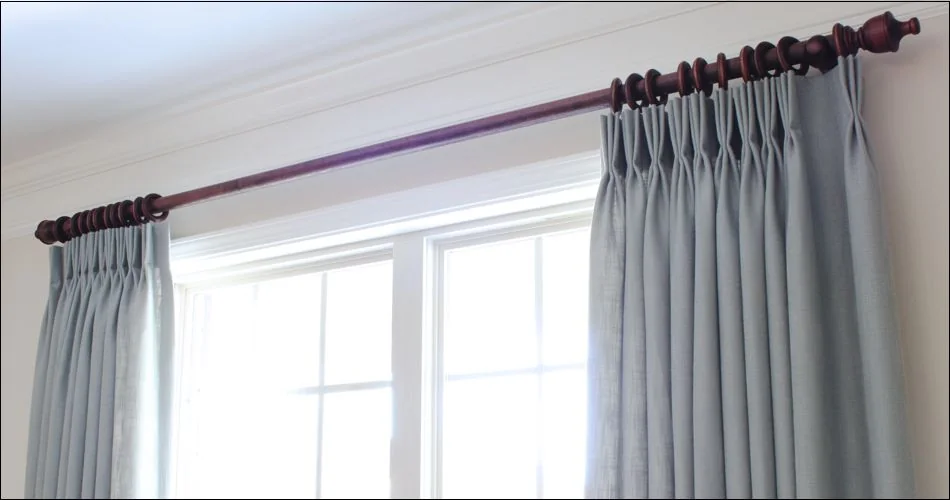
A traverse rod is drapery hardware with an internal track. Instead of sliding rings across the outside of a pole, the drapery connects to carriers that move inside the rod or track.
How a traverse rod works
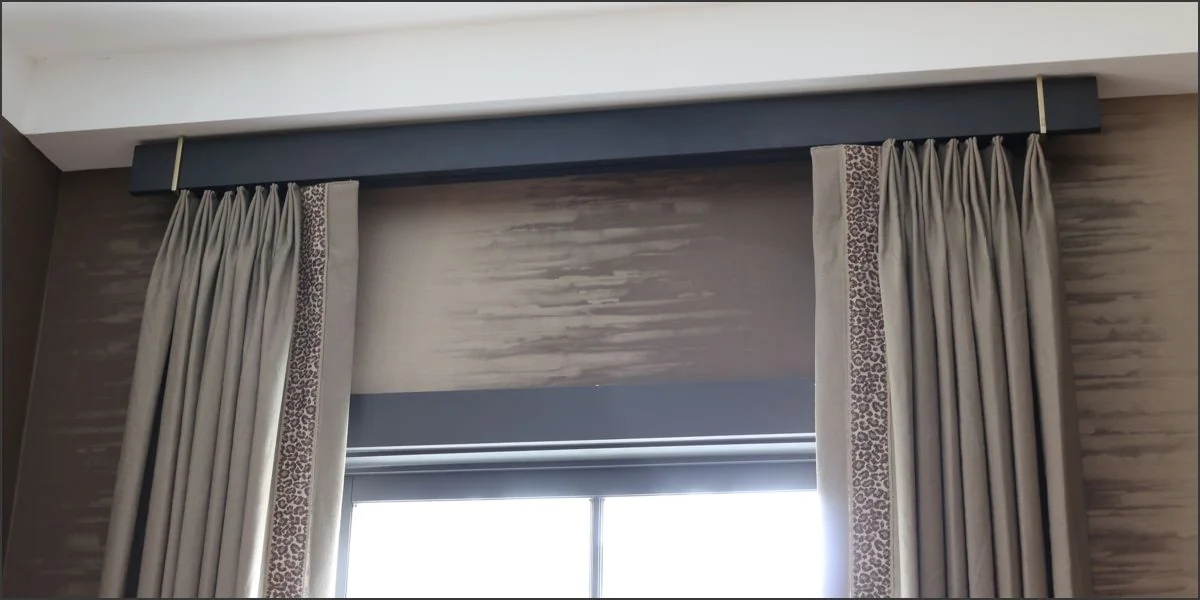
The visible portion may look like a decorative pole, a wood fascia, or a slim architectural profile. Inside it, carriers travel along a channel. The lead edge of each drapery panel connects to a master carrier, while the remaining hooks or snaps connect to evenly spaced carriers.
When the system is operated, the master carrier leads the panel and the other carriers follow. This creates controlled movement and helps keep the heading aligned.
Hand, cord, baton, and motorized operation
Hand draw
The user moves the drapery directly, usually by holding the leading edge or using a wand. It is simple and avoids exposed cords.
Cord draw
A looped operating cord moves the master carriers through an internal pulley system. Cord systems should be specified and installed with appropriate safety devices and local requirements in mind.
Baton or wand draw
A rigid wand attaches to the leading carrier. It keeps hands off the fabric and is common in residential and hospitality applications.
Motorized operation
A motor moves the carriers through the track. Motorization is useful for tall windows, wide openings, difficult access, scheduled operation, and integration with lighting or home-control systems.
Compatible drapery headings
Traverse rods are commonly used with pinch-pleated drapery and continuous wave-style headings. Compatibility depends on the carriers, master carriers, spacing, return arrangement, and fabrication method selected for the system.
When a traverse rod is the better choice
- The drapery will open and close frequently.
- The opening is wide or difficult to reach.
- The design calls for controlled, consistent movement.
- A decorative profile is desired without sacrificing track performance.
- The project may require cord, wand, or motorized operation.
See the custom traverse rod collections to compare architectural wood fascias, decorative profiles, and minimal systems.
Need help specifying a system?
Send us the opening dimensions, photographs, heading style, and operation preference.
Contact Urban Decors